
Agriculture and forestry
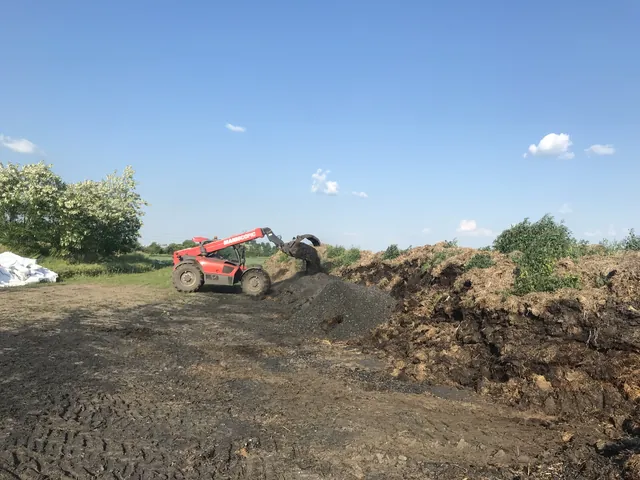
Soil, plants, livestock farming and forest ecosystems
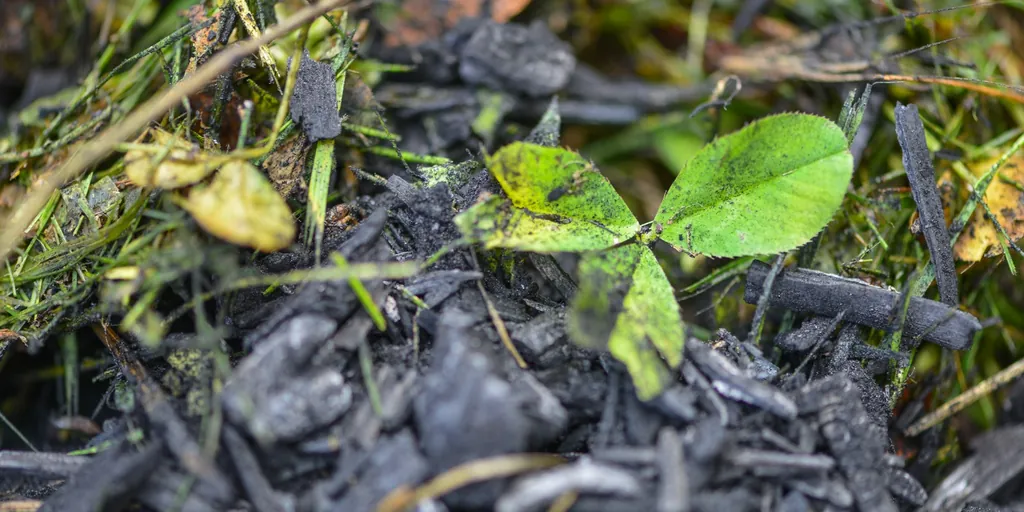
What biochar is, how it is made and where it helps — from farmland to industry.
Biochar is a solid carbonaceous material obtained by the thermochemical conversion of biomass and other suitable organic materials in an environment with limited oxygen. Its properties depend on the feedstock and the production conditions, which means that biochar can be purposefully produced for a wide range of uses.
Biochar has traditionally been associated above all with use in soil. Its porous structure and other physical and chemical properties can help improve soil properties and water and nutrient management, and increase the resilience of soil to drought and degradation. It is also used in growing media, composts, fertilisers, livestock farming and forestry.
Today, however, the importance of biochar goes far beyond agriculture. Thanks to its sorption, surface and material properties, it can be used in the treatment of wastewater and stormwater, the remediation of contaminated environments, in construction, urban infrastructure and the manufacture of advanced industrial materials. Biochar can be a component of concrete, mortars, asphalt mixtures and composite materials, as well as filtration systems, green roofs, urban greenery and stormwater management systems.
Producing biochar is also one way of processing biomass, organic residues and selected waste materials. Feedstocks can include, for example, agricultural and forestry residues, waste wood and even sewage sludge. Besides biochar, pyrolysis (thermochemical conversion) can also yield products that can be used for energy, making it possible to link the material use of resources, waste treatment, the circular economy and bioenergy production.
Another important property of biochar is its ability to store biogenic carbon in a stable form over the long term. Properly produced and applied biochar can thus prevent part of the carbon in biomass from returning to the atmosphere. This principle underpins Biochar Carbon Removal (BCR), which links the use of biomass with long-term carbon storage in soil, building materials and other suitable applications.
Biochar should therefore not be seen merely as a soil additive. It is a versatile carbonaceous material that connects agriculture, forestry, environmental protection, waste treatment, energy, urban infrastructure, construction and industry with long-term carbon storage. Its potential lies precisely in the ability to combine different functions and to create more closed material and carbon cycles.
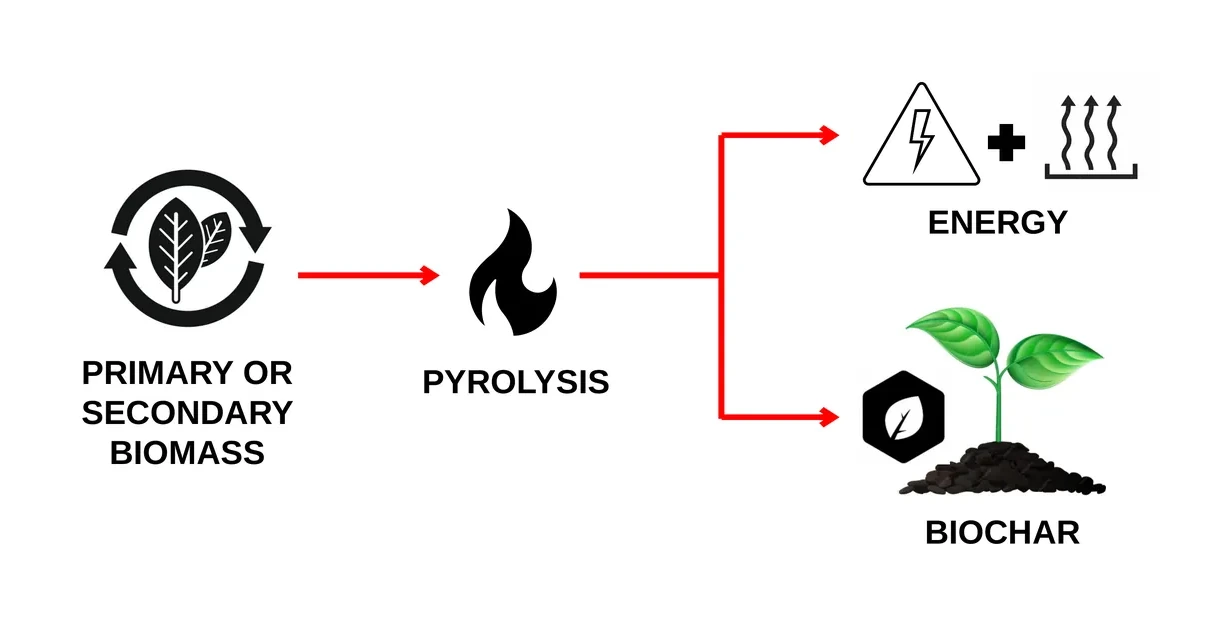
Biochar is produced through the thermochemical conversion of biomass and other suitable organic materials under oxygen-limited conditions, most commonly through a process known as pyrolysis. During heating, the biomass is converted into solid biochar and other products whose energy content can be further utilised.
The yield and properties of the resulting biochar depend primarily on the feedstock and pyrolysis conditions, particularly temperature, heating rate and residence time in the reactor. By controlling these parameters, it is possible to influence the carbon content and stability, pore structure, specific surface area and mineral composition, thereby tailoring biochar for different applications.
Pyrolysis also changes the way biomass-derived carbon moves through the carbon cycle. Instead of most biogenic carbon rapidly returning to the atmosphere as CO₂, a fraction is converted into stable carbon structures and retained in biochar over the long term. If this long-term carbon storage exceeds the emissions associated with biochar production and use, the overall system can achieve a negative carbon balance.
From soil, water and waste utilisation to cities, advanced materials and carbon removal. Discover six main areas in which biochar contributes to the sustainable use of resources, environmental protection and tackling climate change.
Biochar connects resources, materials and carbon. Its value lies not in a single application, but in its ability to link the processing of biomass and organic residues with nutrient recycling, energy production, soil and water protection, the development of new materials and long-term carbon storage.
Soil, plants, livestock farming and forest ecosystems
Biochar has traditionally been associated above all with agriculture and soil care. Thanks to its porous structure, stable carbon and its ability to interact with water, nutrients and microorganisms, it can influence the physical, chemical and biological properties of soil. Its effect, however, is not universal. It depends on the biomass used, the production conditions, the soil properties, the climate, the crop and the method of application. Current recommendations therefore stress choosing the right biochar for a specific soil and purpose.
In agriculture, biochar can be used above all to improve soil water management, retain nutrients and use them more efficiently, adjust soil properties and support soil organic matter. Of particular interest is its combination with compost, manure and other organic materials, which links the properties of biochar with the nutrient cycle.
Biochar can also be part of fertilisers, growing media and complex cultivation substrates, where it can be combined with organic fertilisers, natural fibres or beneficial microorganisms. It is therefore used not only on farmland but also in horticulture, nurseries and forestry.
The wider agricultural cycle also includes the use of biochar in livestock farming and manure management, from where it can subsequently reach the soil via manure or compost. This makes it possible to link the individual parts of a farm and to use organic resources more efficiently.
In forestry, biochar offers potential especially for restoring degraded soils, managing water and nutrients, and preparing growing media and re-establishing forest stands.
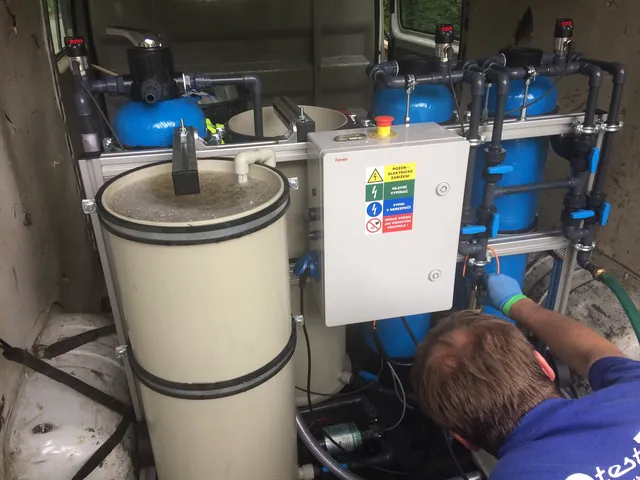
Water treatment, filtration and contaminated sites
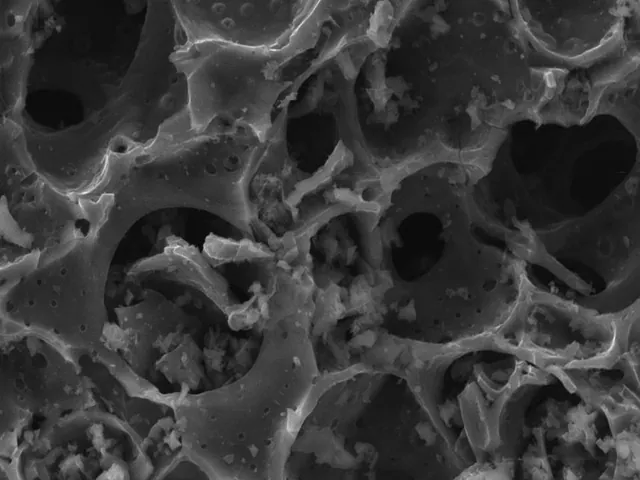
Its porous structure, large internal surface area and varied surface chemistry make it possible to use biochar as a sorbent and filter material. Depending on its origin and production method, biochar can interact with a range of inorganic and organic substances and be used both in water treatment and in the remediation of contaminated environments.
In water management, biochar can be used to treat wastewater, process water or stormwater, either on its own or as part of filtration and bioretention systems. Another important direction is the capture of nutrients, especially nitrogen and phosphorus, which opens up the possibility of recycling them rather than simply removing them from the aquatic environment.
For specific contaminants, the properties of biochar can be tailored through physical or chemical activation, mineral components or other surface modifications. The result is functional biochar-based sorbents and composites designed for particular environmental applications.
In a similar way, biochar can be used in the remediation of contaminated soils, where it can reduce the mobility and bioavailability of certain harmful substances. Water treatment thus links naturally with the remediation of soils, brownfields and other contaminated sites.
Processing residues, recycling resources and producing energy
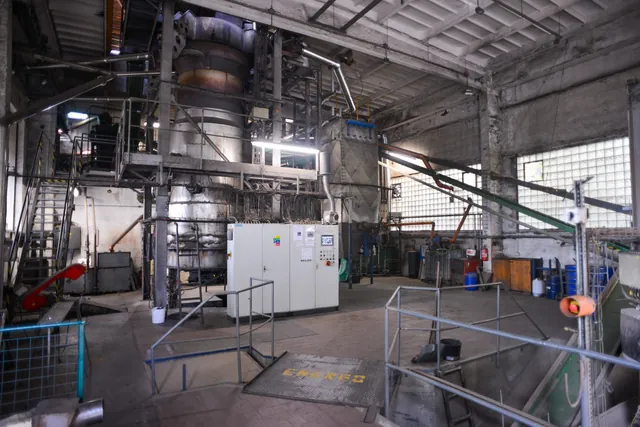
Biochar is one way of turning biomass and suitable organic residues into a new source of carbon, nutrients and materials. Instead of the linear “raw material – product – waste” model, pyrolysis can help create more closed material and carbon cycles.
Feedstocks may include, for example, agricultural and forestry residues, wood and by-products of wood processing, or other suitable organic materials. Sewage sludge is a specific group: thermochemical treatment can turn it into a material whose nutrients, carbon and mineral components can be put to further use, while the pyrolysis itself removes contaminants present in the sludge.
Pyrolysis is not merely a way of producing biochar. Alongside the solid carbonaceous fraction, thermochemical conversion also yields other products that can be used for energy or as materials. Biochar production can thus become part of a wider system linking the management of organic materials, energy production, nutrient recycling and the manufacture of new materials.
Integrated systems are especially interesting, for example those combining anaerobic digestion followed by pyrolysis, which make it possible to exploit the energy, nutrient and material potential of a feedstock step by step.
From waste to resource
Building materials, urban greenery, water and the C‑Sponge City
Building materials, urban greenery, water and the Smart C-Sponge City concept
Cities are where resource consumption, waste generation, the need for water management and the impacts of climate change all come together. This is exactly where the multifunctionality of biochar comes into its own.
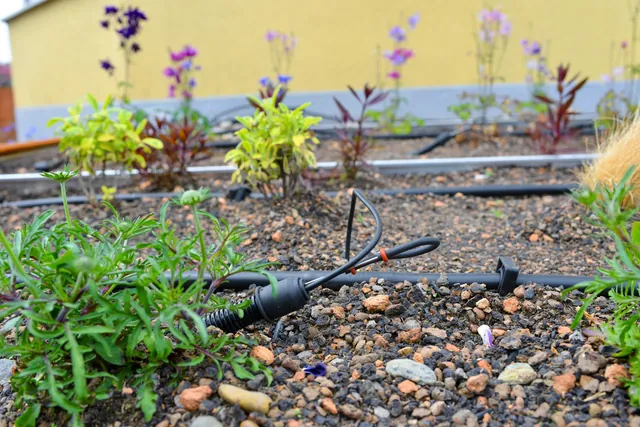
In urban greenery, biochar can be part of growing media for street trees, parks and green roofs. Its use can at the same time be linked with stormwater management systems, for example through bioretention and filtration elements.
Construction is another important field. Biochar can be incorporated into building and composite materials such as concrete, mortars or asphalt mixtures. Using it in long-lived products is also attractive for the long-term storage of biogenic carbon. Current certification schemes for biochar carbon sinks explicitly provide for storing the stable fraction of biochar both in soil and in building products.
Smart C-Sponge City
The Smart C-Sponge City concept extends the traditional idea of the “sponge city”. A city should not only capture and make good use of water, but also connect the management of water, carbon, nutrients, organic residues, greenery and building materials.
A model example is the use of sewage sludge produced within the city itself. Its thermochemical transformation yields sludgechar, which, depending on its properties, can be used in different parts of the urban system:
Step by step, the city changes from a mere consumer of resources and producer of waste into a system that can recycle part of its own material flows while storing carbon over the long term.
Sorbents, composites and functional carbon materials
Biochar is not just a soil amendment. It is also a carbonaceous material whose properties can be tailored to a specific use through the choice of feedstock, pyrolysis conditions and subsequent treatment.
One important direction is sorbents and filter media. The surface of biochar can be further activated or functionalised and combined, for instance, with mineral or magnetic components. The result can be composite materials designed for specific chemical or environmental applications.
Biochar is also being researched as a carbon filler and a component of composites, as well as for catalytic, electrochemical and other technological applications. What matters, therefore, is not the term biochar as such, but above all the relationship between its structure, its surface properties and the function required.
A separate perspective is offered by applications in which renewable biogenic carbon can replace part of the carbon materials of fossil origin. This opens up opportunities in metallurgy and other sectors that depend on fossil carbon. Practical use, however, requires biochar with properties that meet the requirements of the specific industrial process.
The future of industrial applications therefore lies above all in moving from a one-size-fits-all biochar to materials designed for a specific function and use.

Biochar Carbon Removal (BCR), long-term carbon storage and carbon removals
Biochar Carbon Removal, long-term carbon storage and carbon removals
As they grow, plants take CO₂ from the atmosphere through photosynthesis and store the carbon in their biomass. When biomass decomposes naturally or is burned, much of this carbon gradually returns to the atmosphere. Pyrolysis can convert part of the biogenic carbon into a more stable form, which can then be stored over the long term as biochar (and placed, for example, in soil, where it also benefits the soil itself).
This principle underpins Biochar Carbon Removal (BCR).
Biochar thus gains a dual role. It can serve at the same time as a useful material and a means of long-term carbon storage. Carbon can be stored, for example, through the appropriate application of biochar to soil or by incorporating it into long-lived material products.
For genuine carbon removal, however, simply producing biochar is not enough. The amount and stability of the stored carbon must be known, and the emissions of the whole system must be accounted for. The current Global Biochar C-Sink Standard therefore covers tracking the carbon from production to final storage, and accounting for direct and indirect emissions associated with, for example, the biomass, transport, pyrolysis, handling and application of biochar.
BCR connects all areas of biochar use
Carbon removal stands apart among the six areas. It is not just another stand-alone application of biochar, but a cross-cutting function that can overlap with its use in agriculture, cities, construction and other material applications.
It is precisely this combination that is one of the most interesting features of biochar:
Biochar is a solid, porous material produced by the thermochemical conversion of biomass in an environment with limited oxygen. Its main component is chemically stable carbon, which does not decompose or oxidise further. Its surface is highly reactive, reaching hundreds of m² per gram.
Thanks to these properties, it helps address current challenges such as the effects of drought and soil erosion.
No, both mean the same thing: “biouhel” is the Czech equivalent of the internationally used word biochar. On our website we mostly use “biochar”, as it is the established technical term.
They are made by a similar process but differ in purpose and quality requirements. Charcoal is produced as a fuel. Biochar is intended for further use, for example in soil, feed, compost or building materials, and the carbon it contains is meant to stay stored for the long term.
That is why biochar is checked for quality and safety: its stable carbon content, heavy metals and polycyclic aromatic hydrocarbons. Certification schemes such as the European Biochar Certificate (EBC) exist for this purpose.
Biochar is made by heating biomass without oxygen, i.e. by pyrolysis or gasification. In short: organic feedstock → heating without oxygen → stable porous carbon. The resulting biochar contains roughly 20–45 % of the dry weight of the original biomass.
Its quality depends mainly on the temperature in the pyrolysis zone, the heating rate, the residence time in the reactor and the type of biomass. Besides biochar, the units usually also produce heat, and possibly electricity and pyrolysis oil.
Biochar improves the quality of agricultural soil. It increases water and nutrient retention and the content of stable organic matter, which supports microbial activity. During droughts, as a porous material, it helps keep moisture in the soil.
Biochar stores (sequesters) carbon for the long term that would otherwise be released into the atmosphere as CO₂ when biomass decomposes. The stable carbon in biochar does not break down further, which makes it one of the recognised methods of carbon dioxide removal.
Producing biochar is also an environmentally sound way of processing biowaste. In cities, its use is linked to the “Sponge City” concept: a city that retains as much water as possible within its area.
Besides soil, biochar is used as an additive in livestock feed or in compost. In cities it is used in green roofs and constructed wetlands, and in industry as a partial substitute for coal in steelmaking or as a sorbent for cleaning water and air. Construction and advanced materials offer further possibilities.
Yes. Biochar is suitable for flower and vegetable beds, tree planting and compost. It works best when it is “charged” with nutrients before use, for example by mixing it with compost or manure, or at least by soaking it in water or, better still, in a nutrient solution. Untreated biochar could otherwise first bind water and the nutrients dissolved in it from the soil.
We recommend using quality-certified biochar and following the manufacturer’s dosage instructions.
High-quality biochar made from suitable biomass is safe for soil and the environment. However, it depends on the feedstock and production conditions. That is why biochar is checked for heavy metals and polycyclic aromatic hydrocarbons, and certification schemes such as the European Biochar Certificate (EBC) set limits for individual uses.
Among other things, the association promotes clear market standards so that only verified biochar reaches the market.
Join a platform that brings together science, practice and the public around the responsible management of carbon.